
Filling the Space with Void

YEAR
2012-2015

SUPPORTED

Fundacja Vlepvnet,
Warsaw – Poland
Gyeonggi Creation Center
Gyeonggi Museum of Modern Art
TEAF Public Arts Festival Ulsan

LOCATIONS
Seoul, Songdo, Ulsan – S. Korea, 2014
Warsaw – Poland, 2013
Witte de With Festival,
Rotterdam – The Netherlands

Space, Absence, and the Human Need to Define
Space, as both a concept and a physical entity, carries inherent contradictions. It embodies both absence and availability—an emptiness waiting to be filled, and simultaneously, a potential that invites creation. This duality speaks to the human desire to engage with, occupy, and define space in order to give meaning to moments, places, and experiences. Space, whether it is perceived as void or opportunity, is often seen as either a vital condition in need of urgent intervention or as a reflection of a lack of planning and structure. In modern urban environments, particularly within sprawling metropolises, space is less frequently allowed to exist in its natural state; instead, it is seen primarily as a resource to be exploited for functional, commercial, or political purposes.

This transformation of space reflects a broader trend in contemporary urbanism, particularly in fast-growing cities across Asia. Urban spaces are increasingly viewed as commodities—real estate is constantly reconfigured, and public areas are often designed with the intention of maximizing economic value or social control. The rapidly expanding mega-cities in Asia, such as Seoul, Tokyo, and Beijing, embody this phenomenon, where vacant land or “empty” spaces are redefined as opportunities for development or consumption, leaving little room for the natural, unoccupied spaces that might once have existed.

The project began as a four-month research endeavor across various urban, suburban, and rural landscapes in Europe and Asia. Its aim was to explore the nuanced and often subtle expressions of emptiness within these environments, seeking out visual cues that represented both absence and presence. The focus was on the role of space within the urban fabric, with particular attention to the presence—or lack thereof—of visual communication, which often functions as a method for defining and legitimizing space. In this context, the project sought to understand how blank spaces—such as empty advertising billboards or vacant lots—act as sites of potential, waiting to be imbued with meaning, identity, or commercial value.

A central component of this investigation was the examination of blank advertising billboards. These ubiquitous structures, often scattered across urban landscapes, are emblematic of the commercial pressures that dominate modern city life. They are large, imposing, and intentionally empty, awaiting external advertisements that will temporarily fill the space with commercial messages. These billboards symbolize the broader commodification of space in cities, where even emptiness is not left untouched by the forces of capitalism.

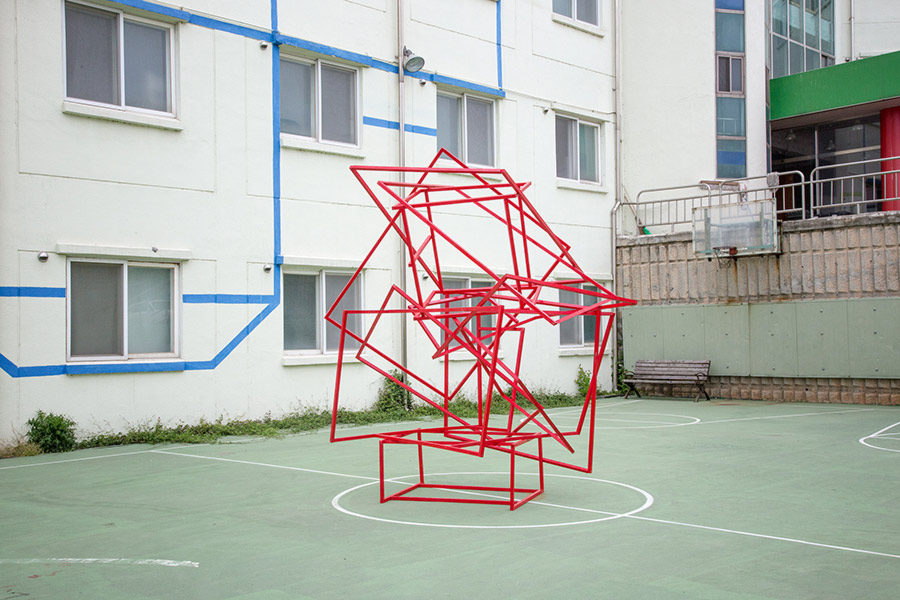
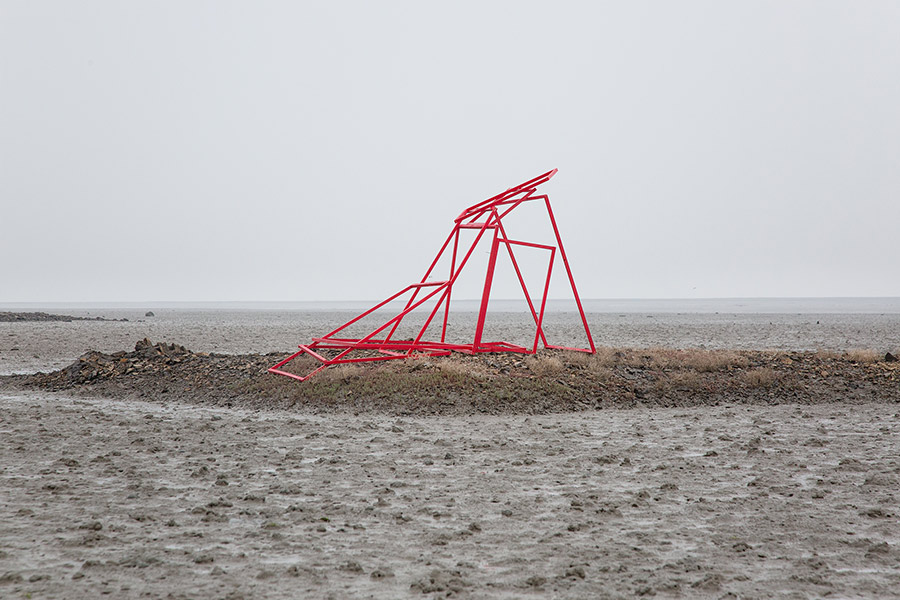
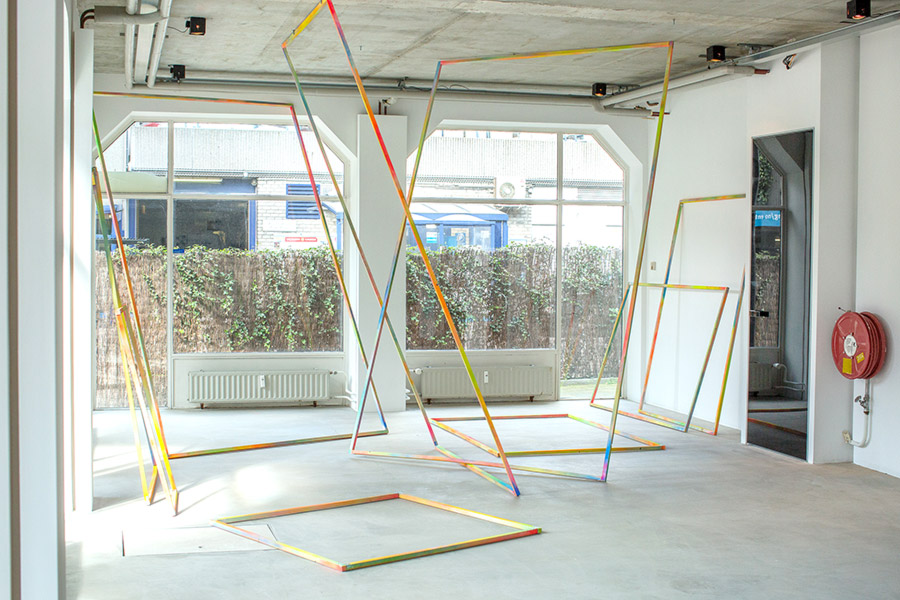
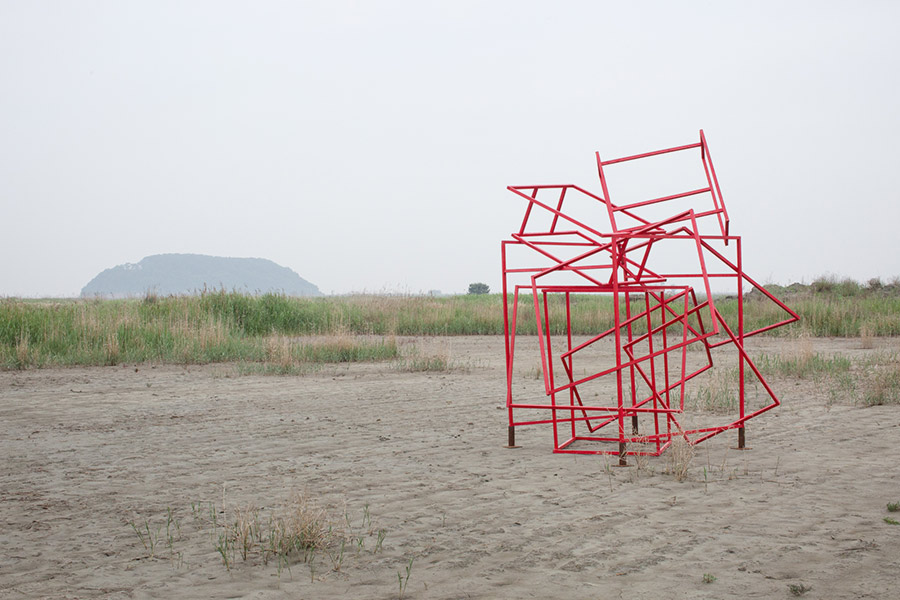
From this research, various dimensions of blank advertising billboards were extracted and reimagined as the basis for a series of artworks, which sought to challenge the traditional use of space as simply a vessel for consumption. The first installation, set against the backdrop of Korea’s extensive landscape engineering projects, was located in regions once filled by the sea and now transformed through human intervention. These areas, which were once defined by natural elements, now serve as testaments to human efforts to reframe the landscape through artificial means. Here, the empty space of the billboard becomes a site to reflect on both the human intervention in nature and the commodification of space in the modern world.

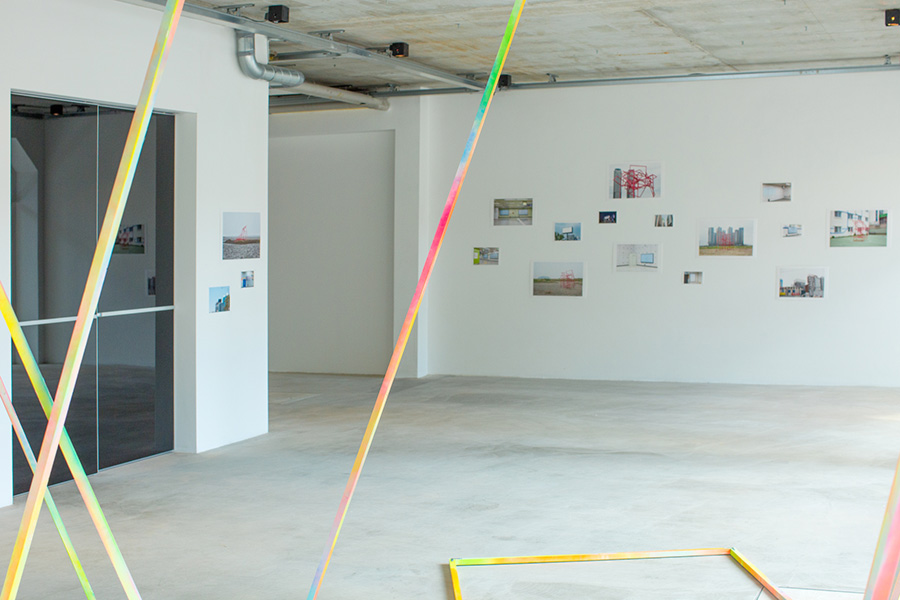
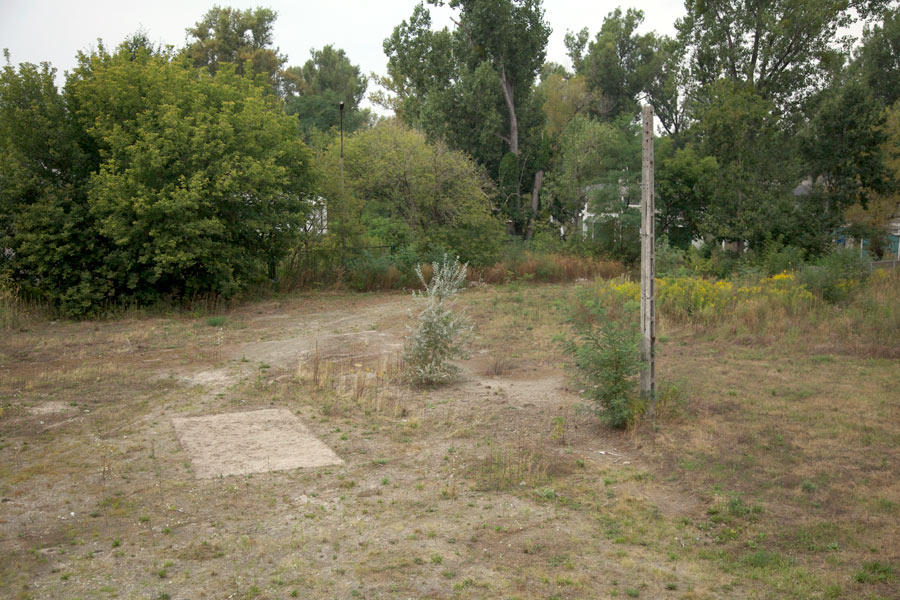
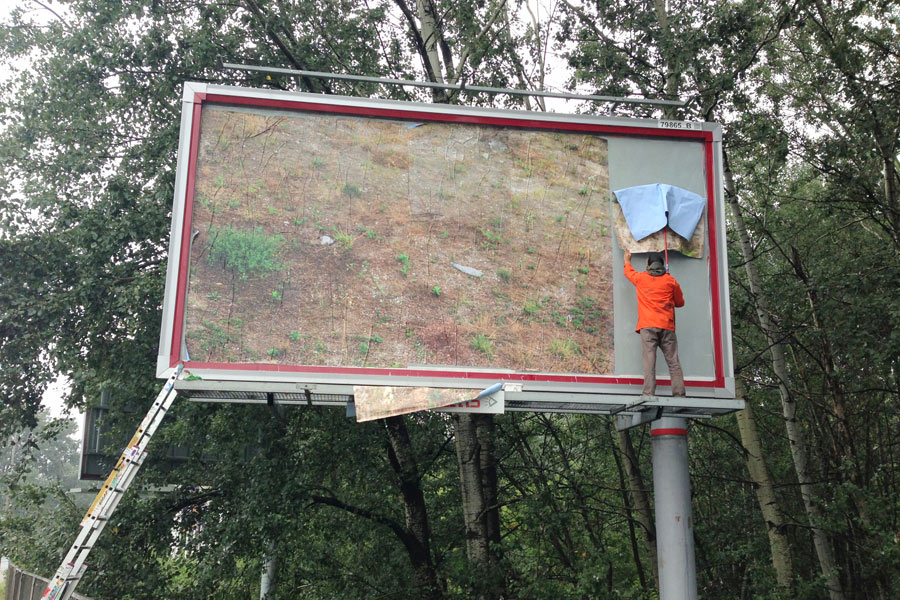
Another part of the project involved an 18-square-meter billboard-shape physically dug into a vacant lot, further emphasizing the disconnect between space as a natural entity and its transformation into a commercialized object. This installation highlighted the intrusion of human-made structures into otherwise empty spaces, suggesting that even voids are subject to manipulation and control. The final piece of the project involved the relocation of the dug billboard into a vacant lot along the ring-road in Warsaw, where the empty space was photographically captured and juxtaposed against the city’s sprawling, utilitarian landscape. This act of photographic relocation called attention to the way in which space, when emptied of its commercial or social function, becomes a blank canvas for new interpretations, meanings, and possibilities.

The project explores how contemporary urban landscapes are constantly being redefined and repurposed, often in ways that obscure or erase the natural and the unoccupied. By focusing on the emptiness of advertising billboards—symbols of both absence and opportunity—the work reflects on how human agency fills space with meaning, identity, and purpose, while simultaneously obscuring or erasing its natural potential. It challenges us to consider the politics of space and the ways in which we, as individuals and societies, use physical environments to reflect our values, desires, and ideologies.

Through this exploration of space and absence, the project calls attention to the cultural, political, and economic forces that shape our cities and landscapes. It invites us to think critically about the role of space in the formation of identity and how the exploitation of space reflects the larger, ongoing tensions between commodification, individual agency, and collective memory.